

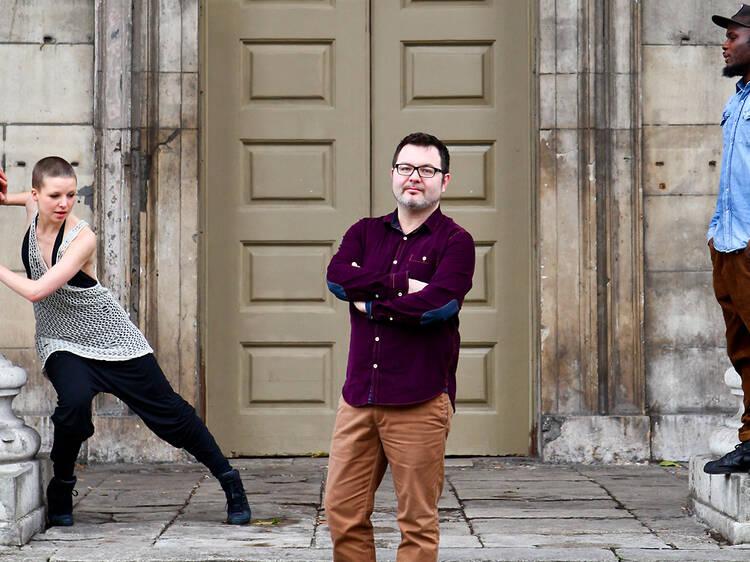
Curator & Choreographer — Tony Adigun
Village Underground, Spitalfields Music Summer Festival
Monteverdi Ballets was an experimental meeting of worlds: seventeenth-century Baroque music, live opera, contemporary dance and hip hop brought together within the raw industrial setting of London’s Village Underground.
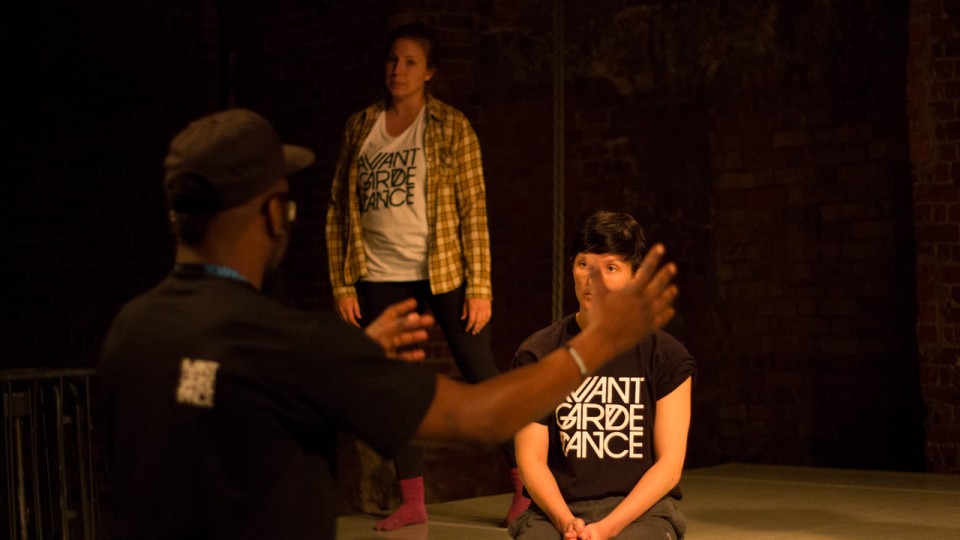
Curated by Tony Adigun in collaboration with Avant Garde Dance and the Early Opera Company, the project explored how the music of Claudio Monteverdi and his contemporary Biagio Marini could be reinterpreted through radically different movement languages.
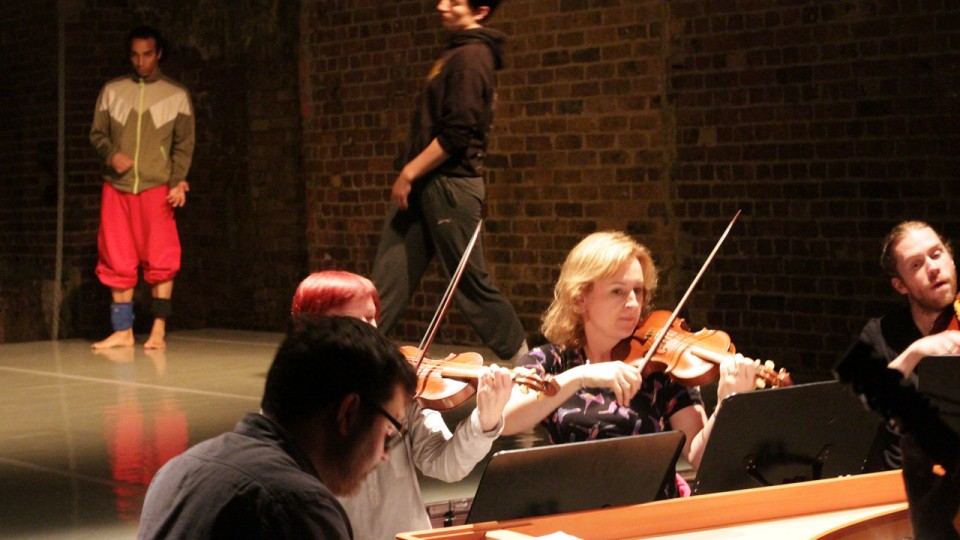
Performed with live musicians and singers under the musical direction of Christian Curnyn, the evening was conceived not simply as dance accompanied by classical music, but as an active dialogue between the physicality of contemporary movement and the immediacy of live Baroque performance.
The programme moved through four distinct choreographic interpretations.
Tony opened the evening with Monteverdi’s Sinfonia: Tempro la cetra, combining hip hop and contemporary movement with choreography driven closely by the dynamics and phrasing of the live score.
Robia Milliner Brown and Ajani Johnson-Goffe were invited to interpret Biagio Marini’s instrumental Passacaglia, creating an ensemble work that introduced another movement vocabulary into the evening.
For Monteverdi’s Lamento d’Arianna, Tony programmed emerging choreographer Botis Seva, whose interpretation used sculptural bodies, restraint and image-making to respond to Arianna’s grief and abandonment.
The evening culminated in Tony’s choreography for Il combattimento di Tancredi e Clorinda — Monteverdi’s dramatic account of the fatal encounter between the knight Tancredi and Clorinda. Singers and dancers occupied the stage simultaneously, with the two central characters embodied physically through movement while the narrative was delivered live through voice and music. Tony’s choreography translated the work’s conflict, intimacy and violence into a highly physical exchange between the dancers.
At the centre of Monteverdi Ballets was Tony’s interest in collision: allowing seemingly distant artistic cultures to occupy the same space without one being forced to imitate the other. Baroque opera met hip hop; established musical traditions met emerging choreographic voices; and a centuries-old score became material for a new generation of dance artists.
The project also reflected Tony’s wider practice as a curator — creating platforms in which artists with contrasting approaches could respond independently to a shared proposition, while collectively forming a single live experience.
